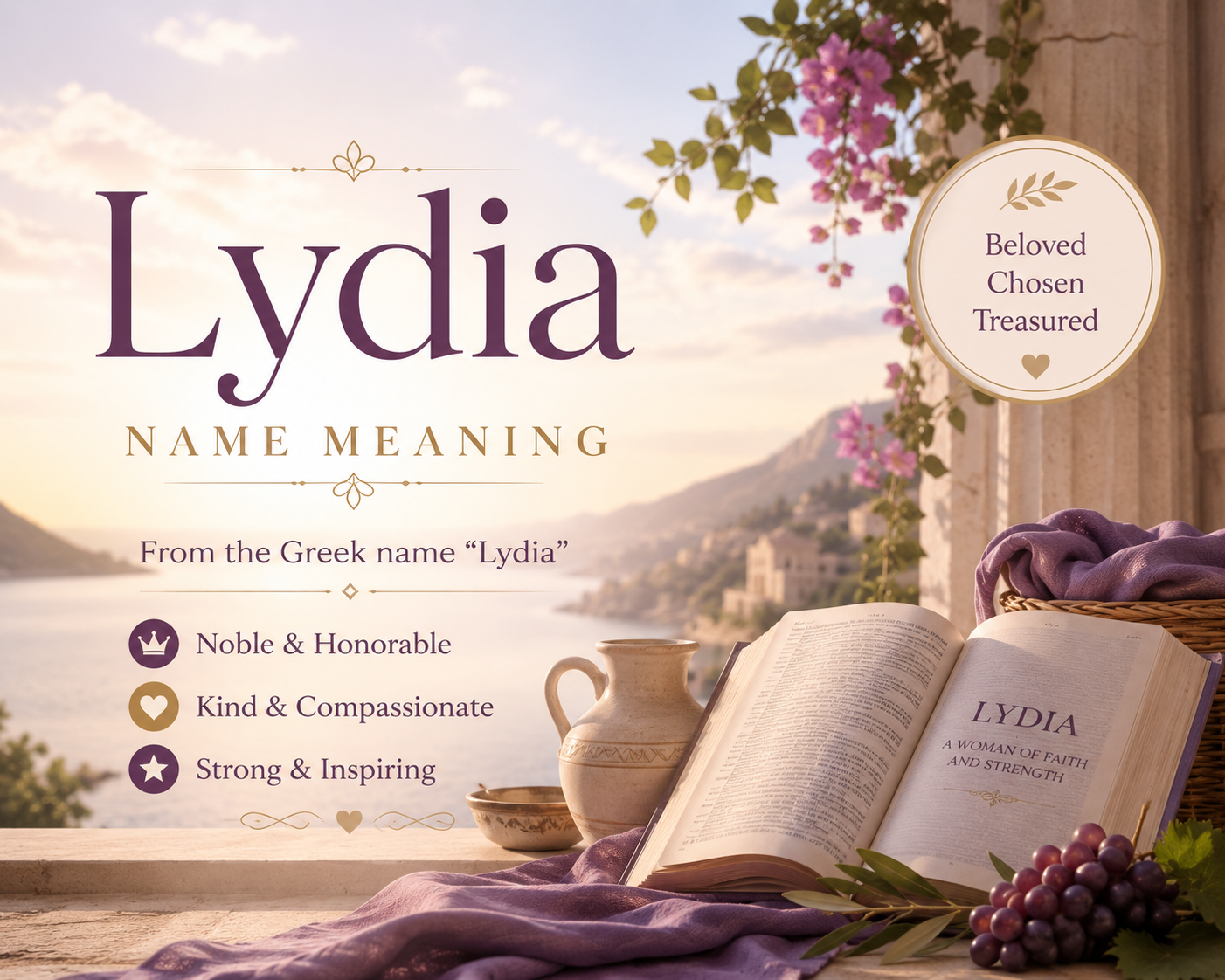
Lydia Name Meaning: Exploring Origins, Biblical Roots, and Spiritual Depth
People spend a lot of time looking for the perfect name because names carry a deep sense of identity. If you are looking at the lydia name meaning, you are dealing with a name that feels both completely modern and deeply historical. This article dives right into the meaning of the name lydia, looking at the history, linguistic roots, and how people view it today.
We will talk about the lydia name meaning in bible contexts, check out related names like Melydia, and even answer some common side questions like what does the name adrian mean in the bible to give you a full picture under the umbrella of Biblez Meaning and general spiritual name research.
The Core Meaning for Lydia and Basic Definition
To start from the very beginning, let us look at the literal definition of the name lydia. The name comes directly from ancient Greece, where it was used as a geographic description.
Geographic and Linguistic Origins
Lydia means from Lydia, which was a wealthy and powerful kingdom located in western Asia Minor, an area that is part of modern Turkey today. In ancient times, people from that region were known for their wealth, culture, and creation of early coinage. So, the direct lydia meaning of name is simply a person who originates from that famous, prosperous region.
Over the centuries, the term evolved from a simple description of regional origin into a beautiful, standalone personal name. In addition to the geographic tie, standard Greek derivations also link the name to traits like beautiful one or noble one.
| Fact Factor | Detail for Lydia |
|---|---|
| Original Language | Ancient Greek |
| Primary Literal Meaning | From Lydia (Region in Asia Minor) |
| Secondary Meanings | Beautiful one, noble one |
| Pronunciation Style | LID-ee-uh |
| Gender Association | Feminine |
When people ask what does lydia mean or what lydia means in a practical sense, they are looking at a name that carries a long legacy of elegance and historical importance. The name has traveled across borders, maintaining a steady presence through hundreds of years.
Lydia Name Meaning in Bible History
For many parents and researchers, the primary interest comes from scriptural history. The lydia name meaning in bible contexts centers on a specific, highly influential woman mentioned in the New Testament, specifically in the Book of Acts.

The Story of Lydia of Thyatira
In Acts chapter 16, readers meet a woman named Lydia who lives in the city of Philippi. She is described as a successful businesswoman who sells purple cloth. Purple dye was incredibly expensive and rare in the ancient Mediterranean world, usually reserved for royalty, nobility, and high status individuals. This indicates that Lydia was independent, wealthy, and possessed significant social standing.
| Biblical Aspect | Narrative Record in Scripture |
|---|---|
| Scripture Location | Acts Chapter 16 |
| Professional Status | Seller of purple cloth, wealthy merchant |
| Key Historical Event | First recorded European convert to Christianity |
| Notable Character Traits | Hospitable, independent, faithful, influential |
| Ministry Action | Hosted Apostle Paul and established a house church |
Lydia heard the message of the Apostle Paul and became the first recorded person on European soil to convert to Christianity. After her baptism, along with the baptism of her entire household, she invited Paul and his companions to stay at her home. Her house became the foundation and meeting place for the early Christian church in Philippi. Therefore, when looking at what lydia mean from a spiritual standpoint, it symbolizes hospitality, leadership, business acumen, and pioneering faith.
Deep Dive into Lydia Meaning of Name Variations
Names undergo shifts depending on regional languages, cultural preferences, and family traditions. The core identity remains, but the spelling and pronunciation can change how the name feels to the ear.
Variations Across Languages
The name maintains a consistent presence around the globe. In Spanish and Italian cultures, it is often spelled Lidia. In French, it becomes Lydie. Each version retains the same foundational background, pointing back to the ancient Greek roots and the famous biblical figure.
| Country or Language | Variant Spelling |
|---|---|
| English | Lydia |
| Spanish | Lidia |
| Italian | Lidia |
| French | Lydie |
| German | Lydia |
| Polish | Lidia |
| Russian | Lidiya |

These variations show how a name can adapt while preserving its core essence. Whether you prefer the classic English version or the softer European spellings, the history remains completely intact.
Melydia Hebrew Meaning and Rare Connections
A fascinating area of modern name research involves blending names or looking at rare derivative forms. One such variant that pops up in discussions is Melydia. People often search for the melydia hebrew meaning to see if it shares the same roots as the classic Lydia.
Blending Roots and Meanings
Linguistically, Melydia is not a traditional ancient Hebrew name. Instead, it operates as a modern variation or a blend of names. It often combines elements of names like Melia or Milcah with Lydia.
In Hebrew name studies, names starting with Mel or Meli often connect to words associated with sweetness, abundance, or items like a vine. When joined with the properties of Lydia, the name takes on a multi-layered modern significance.
| Name Form | Probable Root Origin | Symbolic Theme |
|---|---|---|
| Lydia | Greek | Nobility, regional heritage, purple merchant |
| Meliya / Meila | Hebrew | Vine, pleasantness, sweetness |
| Melydia | Blended Form | Pleasant nobility, sweet strength |
Looking at these rare offshoots adds a unique perspective for parents who want a name that sounds familiar but stands out as completely unique in a crowd.
The Broader Landscape of Biblez Meaning: Exploring Adrian
When people dive deep into researching biblical names, they often branch out to other names that capture a similar vintage, spiritual energy. A common name that comes up alongside Lydia in search trends is Adrian. People regularly ask what does the name adrian mean in the bible and look for the deeper adrian spiritual meaning.

Does Adrian Appear in the Bible?
To be direct, the name Adrian does not appear anywhere in the text of the Old or New Testaments. It is not a literal biblical name in the way that Lydia, Mary, or John are. However, it possesses a massive amount of spiritual significance because of its history in the early church and its symbolic ties to scripture.
The Linguistic Meaning of Adrian
Adrian comes from the Latin name Hadrianus, which means from Hadria. Hadria was an ancient northern Italian town that gave its name to the Adriatic Sea. Therefore, the core literal meaning of Adrian is man of the Adriatic or one who comes from the sea.
| Name Aspect | Adrian Metric Profile |
|---|---|
| Linguistic Origin | Latin (Hadrianus) |
| Literal Meaning | From Hadria, person of the sea |
| Biblical Text Mention | None (Not directly in scripture) |
| Primary Spiritual Themes | Depth, purification, strength, resilience |
| Historical Connection | Early Christian martyrs and papal history |
The Adrian Spiritual Meaning and Water Symbolism
Even though the name is missing from the pages of scripture, the connection to the sea links Adrian directly to powerful biblical themes. In Christian symbolism, water represents a variety of profound concepts:
- Purification and Baptism: Water is the central element used for spiritual cleansing and rebirth in the Christian faith.
- The Holy Spirit: Scripture frequently references living water as a representation of the Holy Spirit moving within a believer.
- Spiritual Depth: The vastness of the sea reflects the deep things of God, calling to mind verses like Psalm 42:7 where deep calls unto deep.
- Strength and Calm: Just as Jesus calmed the roaring waves of the sea, the water connection reminds people of divine peace during difficult times.
Additionally, several early Christian figures and martyrs bore the name Adrian, cementing its place as a trusted, spiritually rich option for Christian families.
Comparing Lydia and Adrian: Visualizing the Data
To help see how these two popular names compare side by side in terms of their origins, themes, and usage, we can break them down across multiple categories. This helps highlight why people looking into names often view them as highly compatible choices.
| Comparison Category | Lydia Profile | Adrian Profile |
|---|---|---|
| Language Origin | Ancient Greek | Latin |
| Literal Definition | From the region of Lydia | From the town of Hadria / Adriatic Sea |
| Direct Biblical Mention | Yes (Acts 16) | No |
| Scriptural Symbolism | Purple cloth, luxury, leadership, hospitality | Deep water, purification, baptism, strength |
| Gender Profile | Predominantly Female | Predominantly Male (Unisex variants exist) |
| Historical Vibe | Antique chic, pioneering businesswoman | Classic Roman, strong, enduring |
Practical Analysis of Names and Topical Authority
Understanding names requires looking beyond dictionary definitions. You have to consider how names operate in the real world and how they affect our perception of identity.
Cultural Legacy of Lydia
The name Lydia has enjoyed a long history of use, particularly after the Protestant Reformation when parents began looking heavily to the Bible for name inspiration. It has a vintage charm that never feels completely out of style. It balances a soft, classic sound with an underlying history of strength, thanks to the business success of the biblical Lydia.
How Names Shape Perception
When a child is named Lydia, they carry a name that is associated with intelligence, Independence, and grace. The legacy of the seller of purple gives the name a sense of dignity that works well at any age, from childhood through a professional career.
Deep Statistical and Regional Data For Name Selection
When choosing a name, looking at historical data and modern trends provides great context. Let us take a look at how the name Lydia distributes across different eras and tracking metrics.
| Historical Era | Primary Usage Trend | Social Association |
|---|---|---|
| Ancient Era (BC) | High regional usage in Asia Minor | Associated with wealth and early currency |
| Early Church (AD) | Foundational Christian usage | Associated with hospitality and house churches |
| 19th Century | Steady classic popularity | Viewed as an elegant, traditional choice |
| Modern Era (2020s) | Consistent Top 100-200 rank | Valued for its vintage, strong female legacy |

This steady history shows that the name avoids being a passing fad. It remains grounded in rich historical truth while fitting in perfectly with modern naming patterns.
Summary of Essential Themes
Choosing a name is a significant decision, and exploring the background brings a lot of clarity. Here is a final look at the core takeaways regarding the name Lydia and its associated concepts:
- Root Definition: The definition of the name lydia centers on its Greek origins, meaning from Lydia or noble and beautiful.
- Scriptural Importance: The lydia name meaning in bible contexts centers on a powerful, wealthy businesswoman who became the first European convert to Christianity.
- Symbolic Value: The name represents leadership, independence, hospitality, and a pioneering spirit.
- Related Concepts: Exploring alternative forms like Melydia or looking at contemporary options like Adrian helps broaden your understanding of spiritual name choices.
Whether you choose it for its historical weight, its beautiful sound, or its inspiring scriptural legacy, the name Lydia remains an exceptional choice that carries timeless value.
Frequently Asked Questions
What is the exact definition of the name lydia?
The name Lydia literally means from Lydia, pointing to an ancient, prosperous kingdom located in western Asia Minor. Over time, the name also became associated with the Greek meanings for beautiful one or noble one.
Is Lydia a common name in the Bible?
Lydia appears specifically in the New Testament in the Book of Acts. She is a prominent figure because she was a wealthy merchant who sold rare purple cloth and became the first recorded Christian convert in Europe, hosting the early church in her home.
What does the name adrian mean in the bible spiritually?
The name Adrian does not appear directly in the text of the Bible. However, it comes from a Latin root meaning from Hadria or man of the Adriatic Sea. Spiritually, it connects deeply to biblical water symbolism, representing purification, baptism, spiritual depth, and the Holy Spirit.
What is the melydia hebrew meaning?
Melydia is not an ancient Hebrew name; it functions as a modern blended name. It combines elements from Hebrew names like Melia or Meila, which can mean vine or pleasantness, with the classic Greek name Lydia, creating a contemporary name meaning pleasant nobility.
Why is the biblical Lydia associated with the color purple?
Scripture notes that Lydia was a seller of purple cloth from the city of Thyatira. In antiquity, purple dye was extremely expensive, difficult to produce, and associated exclusively with royalty and high wealth, showing that Lydia was a highly successful, independent businesswoman.

BibleZMeaning is a faith-based online platform founded by Jason Smith, dedicated to helping readers uncover the deeper meanings, symbolism, and spiritual insights found throughout the Bible. The website provides clear, engaging, and well-researched content that explores biblical names, numbers, symbols, verses, and Christian teachings, making Scripture more accessible and meaningful for readers of all backgrounds.